

I didn’t know about chili until I moved to Texas at 23. In “Big D,” it wasn’t long before I was initiated. There still exists a well-known restaurant that specializes in chili, too, called Tolbert’s, that co-workers took me to for my chili introduction. (I thought their chili only adequate…)
The first time I made chili, I followed the recipe in The Great West. It was one of the many books of the Foods of the World series put out by Time-Life a million years ago.


If I hadn’t made it myself, I might have hated chili. Not to sound horribly critical, but have you ever been to a chili cook-off?!! Oh my. Such terrible chilis. Inferior meat, chili too watery and horribly under-seasoned to top everything off.
But no, I followed a recipe, and fell in love with chili.
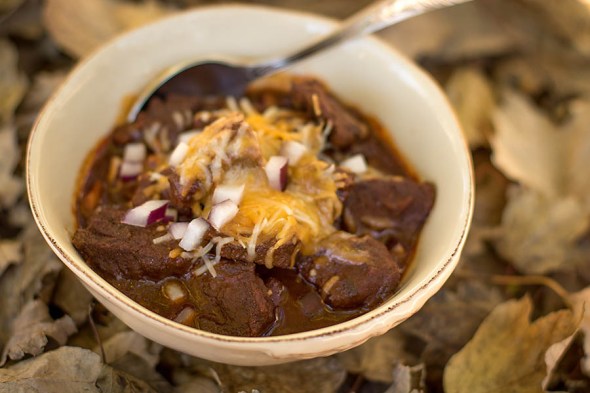

There are a few things about chili about which I feel strongly. The meat, the liquid, and the tomatoeyness.


First of all, the meat has to be good quality. I’m not saying use beef tenderloin. On the contrary, a good chuck works well. You need some fat, and you need a meat that can hold up to a couple hours of cooking. What I personally don’t like is ground beef. It pretty much dissolves, and you’re left more with a beef sauce than a chili. I like chunks!
Secondly, chili, in my book, should be meaty and thick. That means very little liquid. You need some beef broth in which to cook the beef, but you don’t want to serve the beef drowning in broth. Otherwise, it’s beef soup.
Thirdly, many people think that chili requires lots of tomatoes. Much to the contrary, chili doesn’t have a tomato base to it because it’s not a beef stew – it’s a chili. It’s different.
I might mention a fourth aspect of chili that many people can’t agree on – and that’s the addition of beans. There is the no-bean camp and the bean camp. There is only one reason that I add beans to chili, and that’s the health factor. It’s a no-brainer to me, but good chili is good either way!
Chili
5 pounds beef chuck, trimmed
Oil or bacon fat
Salt and pepper
2 onions, chopped
10 cloves garlic, minced
3 tablespoons paprika
2 tablespoons ground cumin
2 tablespoons ground chipotle
2 tablespoons New Mexico chile peppers
2 tablespoons ground ancho chile pepper
1 tablespoon dried oregano
1/2 teaspoon ground cayenne pepper, optional
16 ounces beef broth
2 tablespoons tomato paste
2 cans kidney beans, drained well, optional
Cut up the beef into small pieces. They don’t have to be perfectly uniform in size.


Place a large Dutch oven on the stove. Add some oil, and turn up the heat to high. When the oil is hot, begin browning the beef in batches. Add a generous amount of salt, and some pepper. Brown, moving the beef around occasionally, until very little pink remains.


Although browning each batch of meat takes a while and is a tedious process, it has to be done this way. If too much meat is added to the pot at one time, it lowers the internal temperature of the pot, and instead of browning, liquid is produced and the meat poaches instead. We don’t want that.
When meat is nicely browned, remove it to the bowl, and continue with the remaining meat, adding oil as necessary with each batch.
After browning all of the meat, turn down the heat to medium and add a little oil to the pot. Add the onion and sauté for about 4 minutes.


Then add the minced garlic, the seasoning, and stir well. The mixture will be dark and rich. Cook it for about one minute.


Then add the beef broth and stir to combine, scraping all the caramelized bits of browned meat that have stuck to the bottom of the pot. Carefully return all of the meat to the pot, including any juices that have accumulated. Stir well.
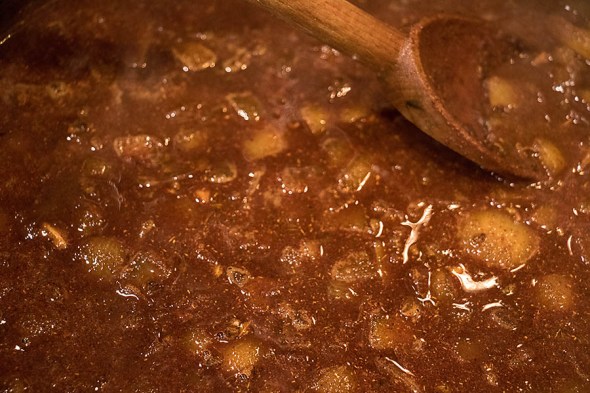

Bring the chili to a boil, cover the pot, lower the heat, and simmer for at least 2 hours. At that time, remove the lid and look at the chili. The beef will have shrunk in volume. If you think there is too much liquid in the chili, raise the heat a bit and let the liquid reduce for maybe 15 minutes or so, uncovered.
Then stir in the tomato paste and the drained beans and heat through. Taste for seasoning. You might need more salt, but taste first!

There are probably many different opinions regarding what to put on chili. I personally love the addition cheese, and chopped purple onions.

But sour cream is a lovely addition as well.


However you serve it, enjoy the richness of the chile peppers and other seasoning that flavor the beef.

If you don’t have ground ancho chiles, you can always use the same amount of ancho chile pepper paste.